Sink or swim at Buttonwillow
The E36 developed a problem on the first lap Friday. By Sunday I was in HPDE 2, 25 seconds faster, with my HPDE 1 check ride signed off.
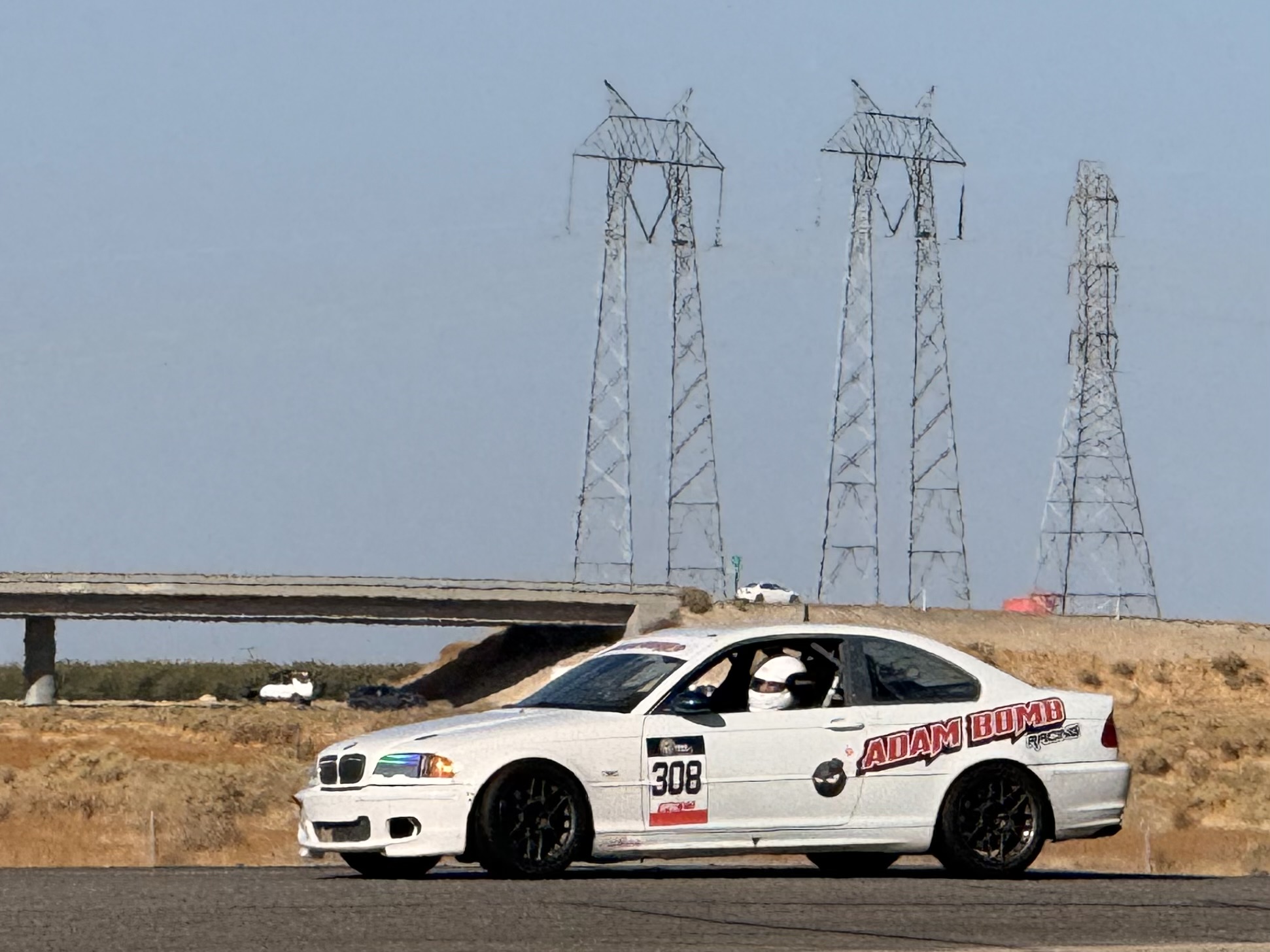
What happened
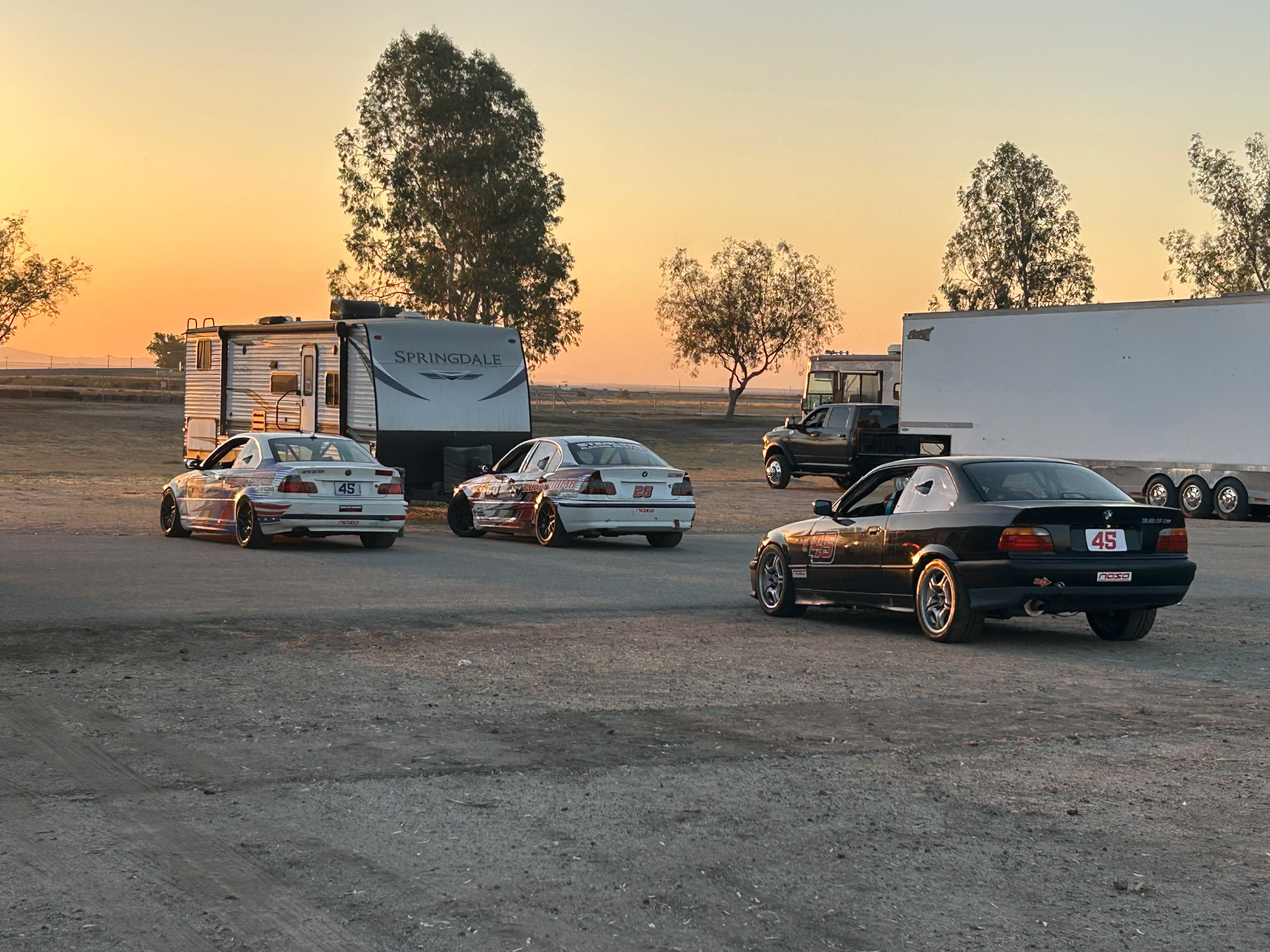
The week before was about getting the E36 ready. I brought it home from Thunderhill, installed the passenger seat and harness hardware, secured the door locks, added roll-bar padding, and checked the GoPro. One stubborn trailer tire refused to come off — one more challenge before we left. Then we headed to Buttonwillow with Marc and Adam, fueled the cars, unloaded, and settled into the paddock with more of Marc's racing friends.
Friday was supposed to be my day to learn the track. The car ran well for about half of my first lap, then started losing power and wouldn't rev past about 4,000 RPM under load. When I slowed down, the temperature gauge climbed into the red. Coolant was full cold, the belt was intact, no strange noises. Without parts, it wasn't worth the risk. The E36 was parked.
After I had to get off track, a fellow Spec 3 driver gave us some parts to try so we could be ready for HPDE on Saturday, 10/10. We changed the cam and crank sensors and took the car back out — the second GoPro video below is that run. Did we fix it? Watch and see.
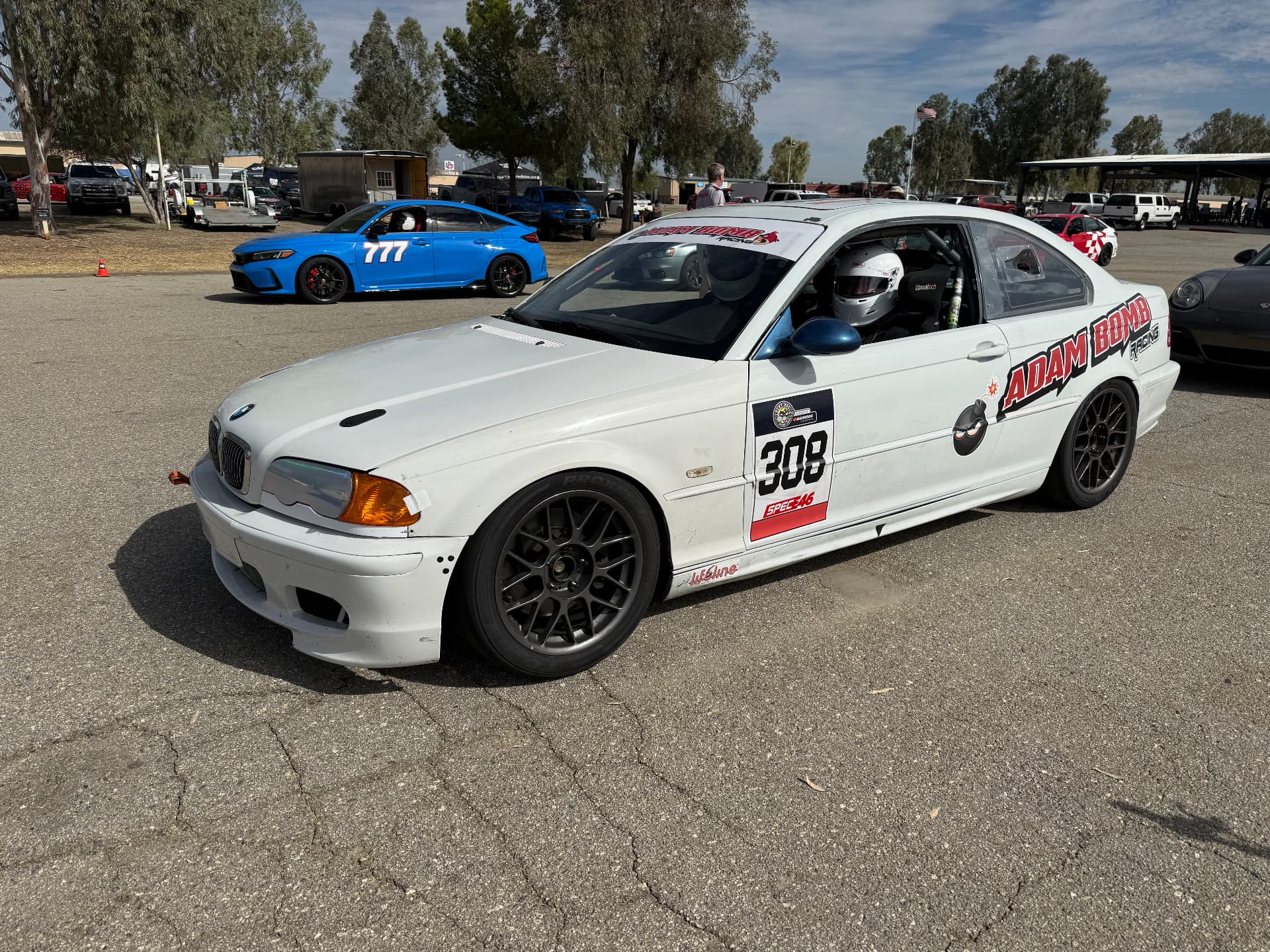
Marc stepped in and handed me his E46 coupe. I got about 20–30 minutes of seat time. At one point I got a black flag and flashing lights and thought I'd done something wrong — Marc just wanted to make sure I wasn't running out of fuel. By the end of the day he was arranging another car for me for Saturday and Sunday.
Saturday was my first full day of NASA HPDE 1 — classroom, then about 20 minutes on track, back and forth all day. I was nervous. Faster cars coming up behind me made me anxious, and I spent a lot of the day pointing people by. Worrying about holding people up took my focus off my own driving. But as the day went on I settled down and started trusting what I was learning.
That evening Marc and Adam walked the track with me — track position, speeds, gears, and where to put the car for each apex. It turned out to be one of the most useful parts of the weekend.
Sunday was the turning point. I asked to move up to HPDE 2 and made a conscious decision to drive my own lines and my own pace instead of letting the fear of holding someone up drive the car. I was faster, more comfortable, and more confident. I stayed on track all weekend, and by the end of Sunday my HPDE 1 check ride was signed off — which puts me in position to request HPDE 3 at a future NASA event.
Buttonwillow is demanding. There were several accidents, including two HPDE 1/2 students in newer Mustangs who hit the wall and totaled their cars Saturday. Nobody wants to see someone's weekend end that way. It reminded me to respect the track and the risks.
One of the Adam Bomb Racing teammates asked about my Friday. After hearing it, he turned to Marc and said something like, "Sink or swim, you really threw him out in the deep end." I'm glad I swam.
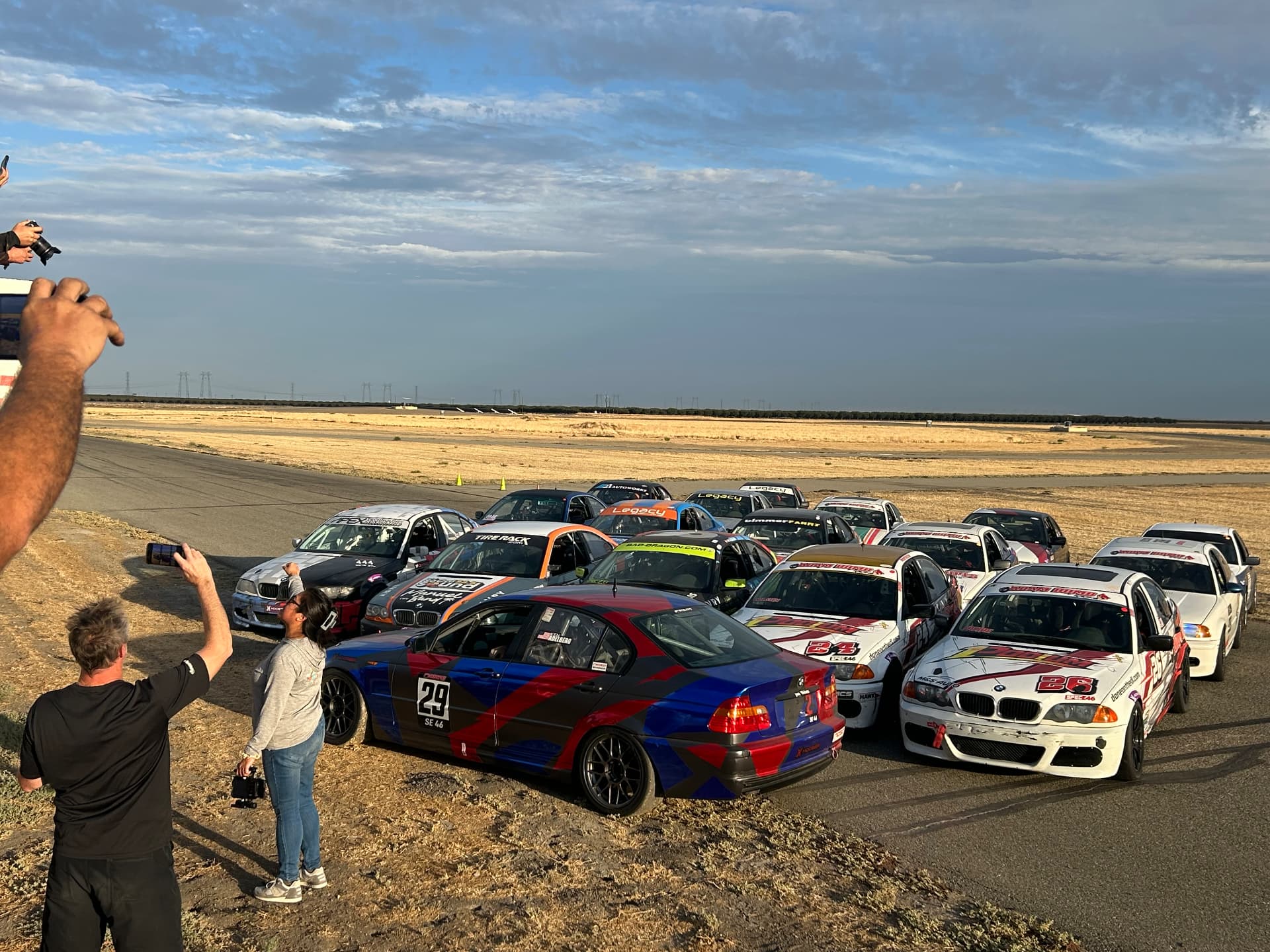
Adam went on to win his race. Watching him drive was impressive — those Spec E46s are seriously capable cars, and Adam is fast.
What I learned
- —A track walk can teach you more than a dozen laps. Seeing the apexes on foot made Sunday click.
- —Worrying about the cars behind me made me slower. Driving my own line made me faster — and safer.
- —Plans change. The car broke on lap one and the weekend still counted because people were willing to help.
- —The lap times were encouraging, but the real wins were an undamaged car, staying on track, managing my nerves, and the sign-off.
The car
The BMW E36 Spec 3 lost power under load and showed high temperature during Friday practice. It's parked pending diagnosis and parts. I drove Marc's E46 coupe Friday, and another car was arranged for Saturday and Sunday.
The people
Marc and Adam have been generous with their time, knowledge, and equipment — from the backup car to the Saturday track walk. I'm grateful our paths crossed. They are helping me move toward something I've wanted for a long time, and the connection feels almost fated.
From the day
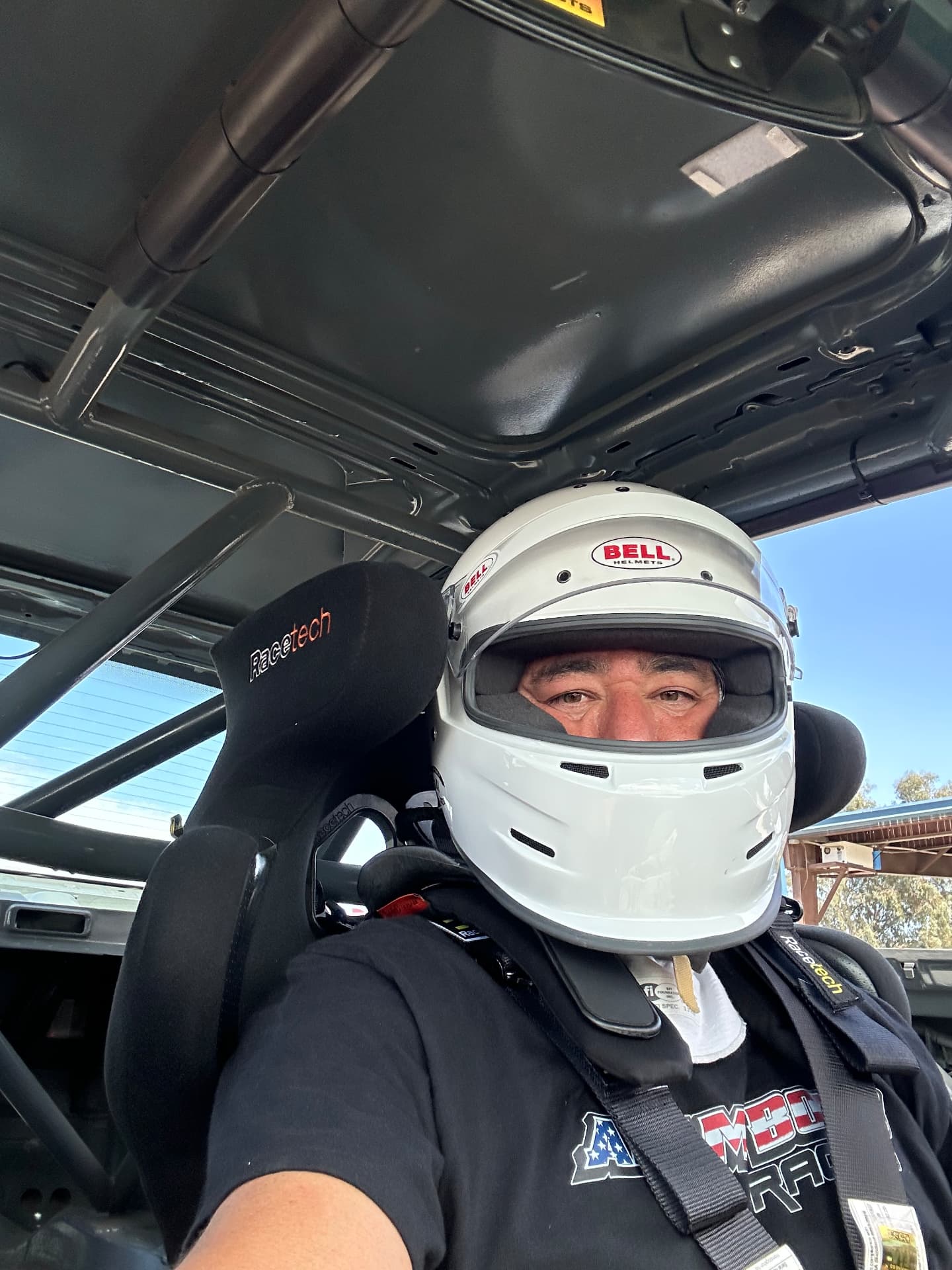
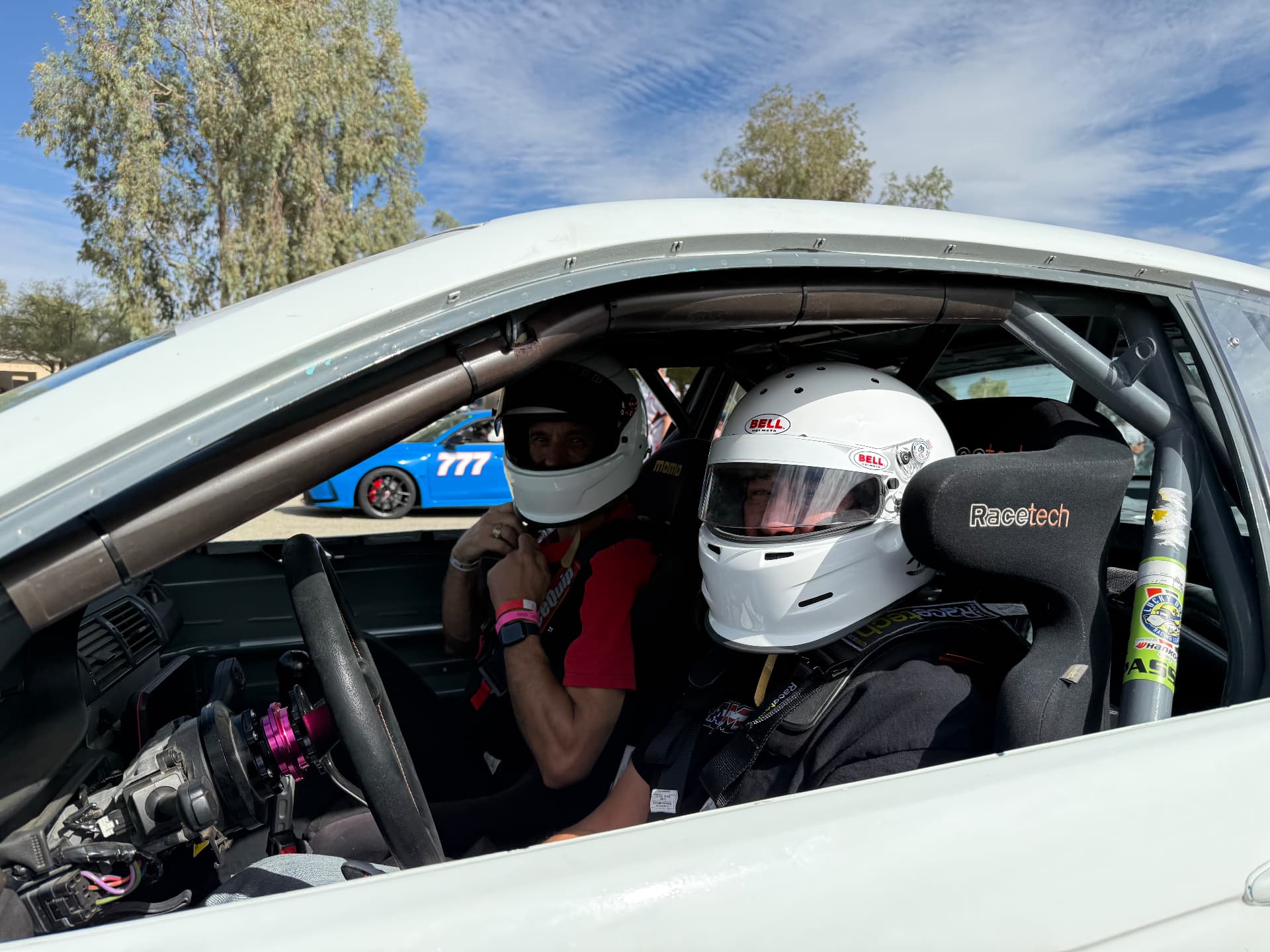
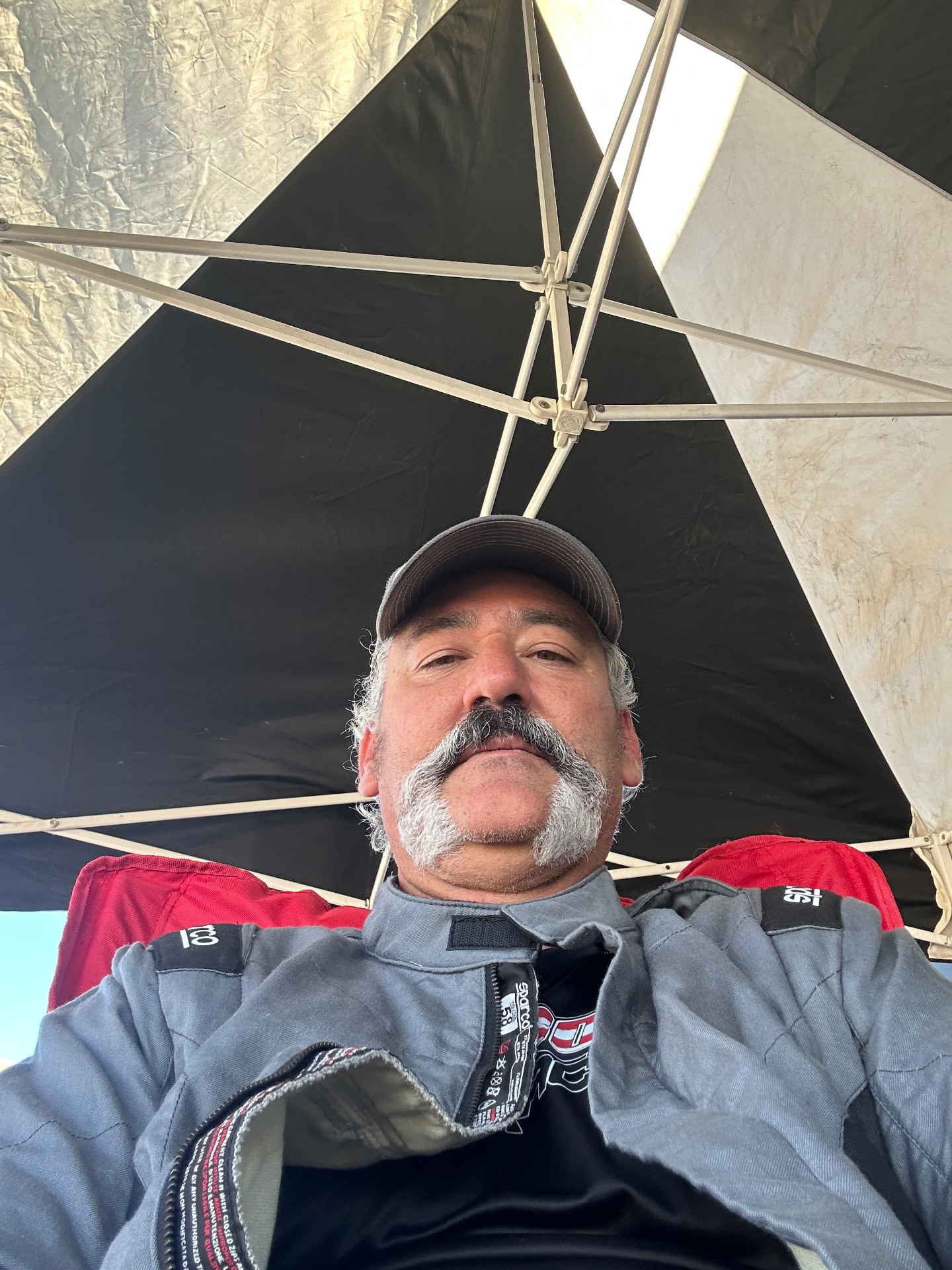
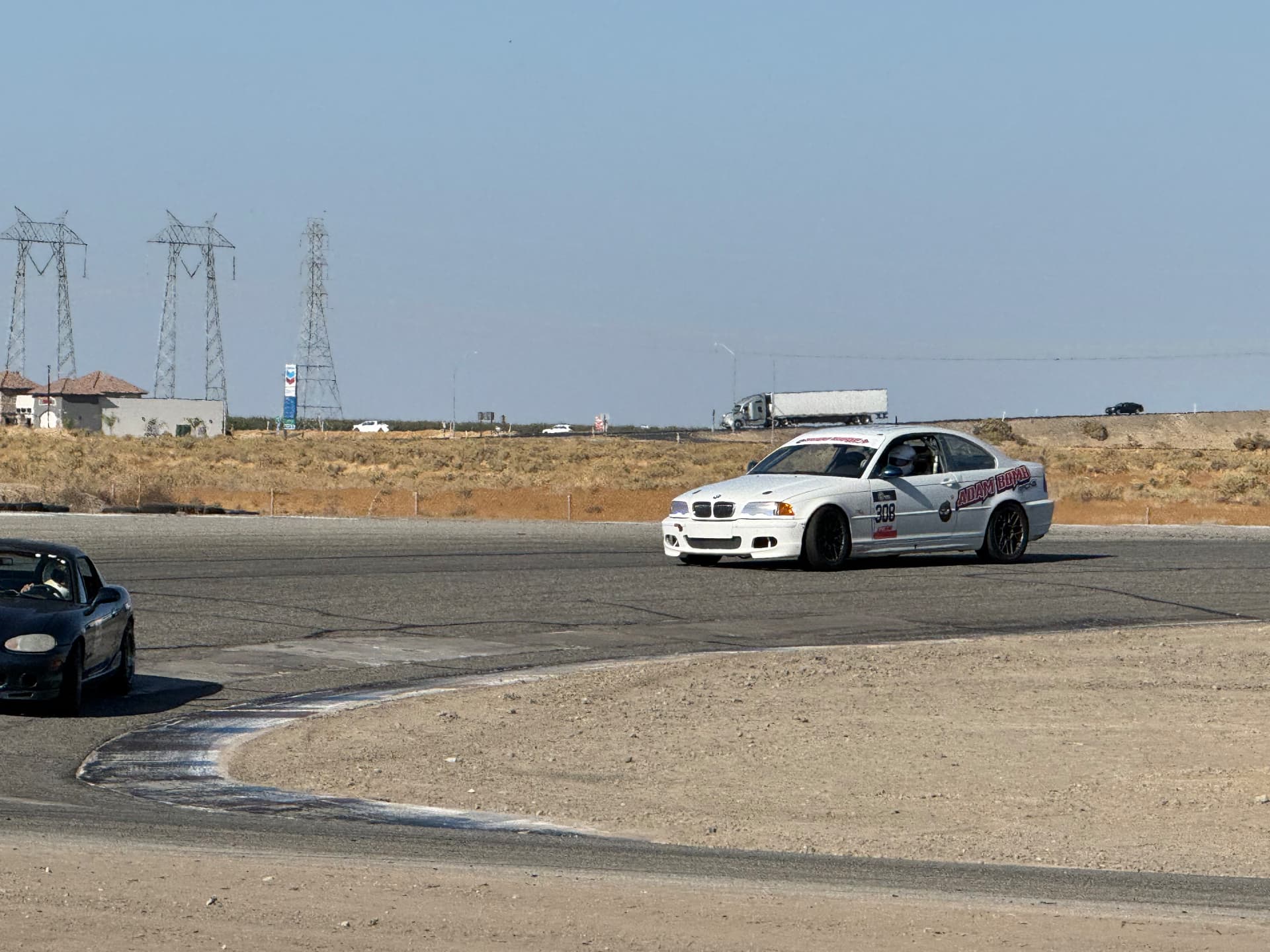
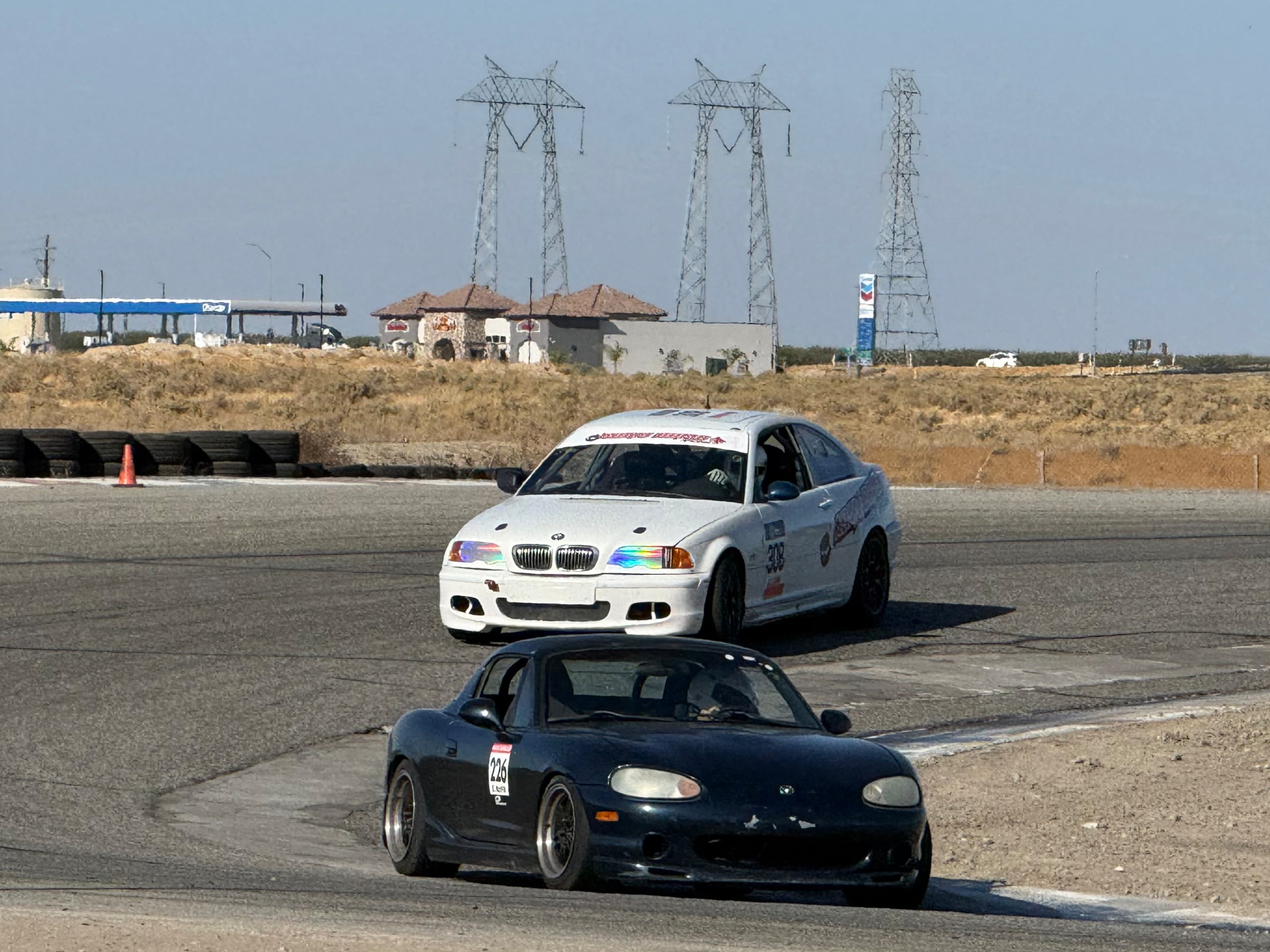
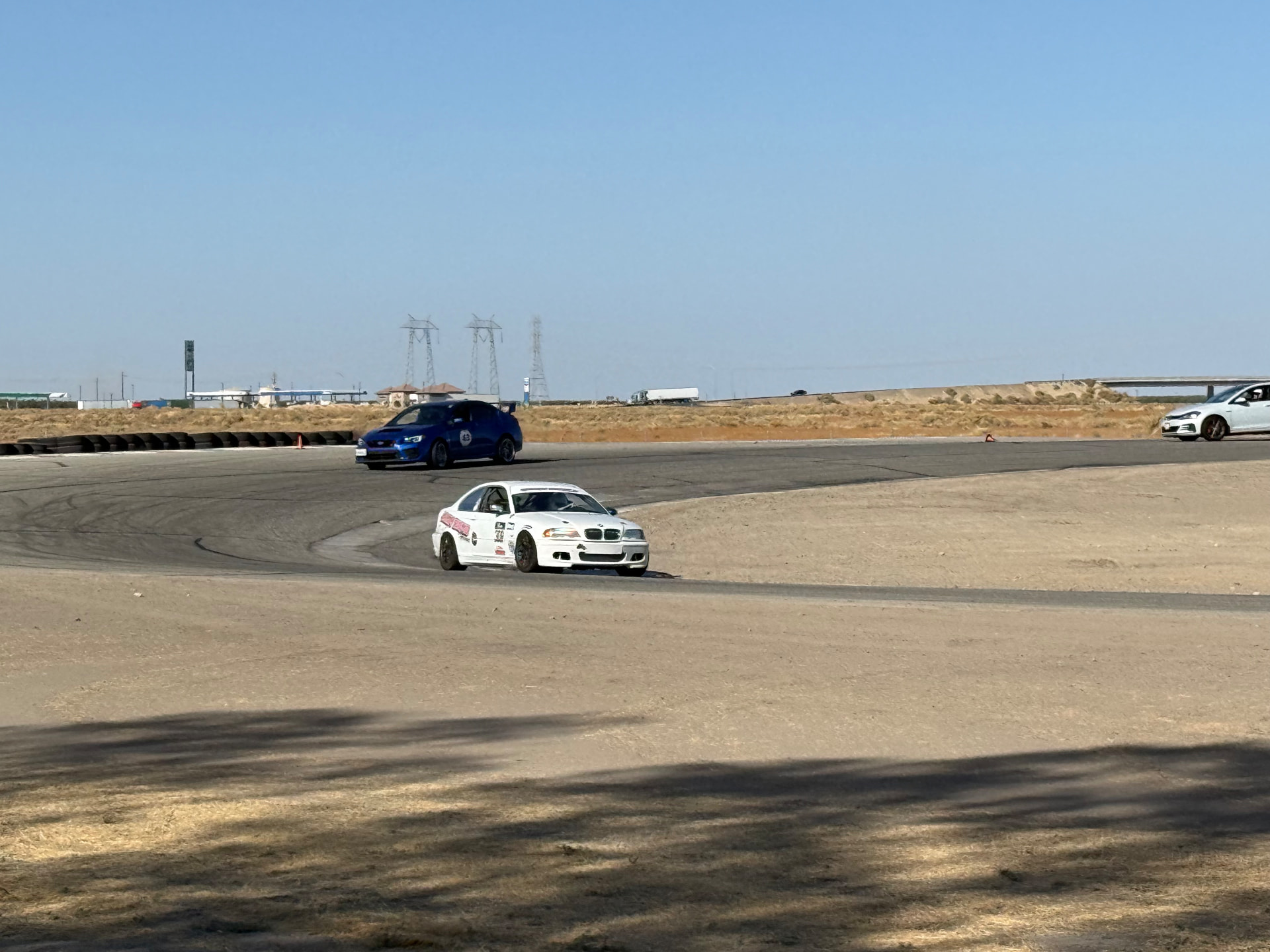
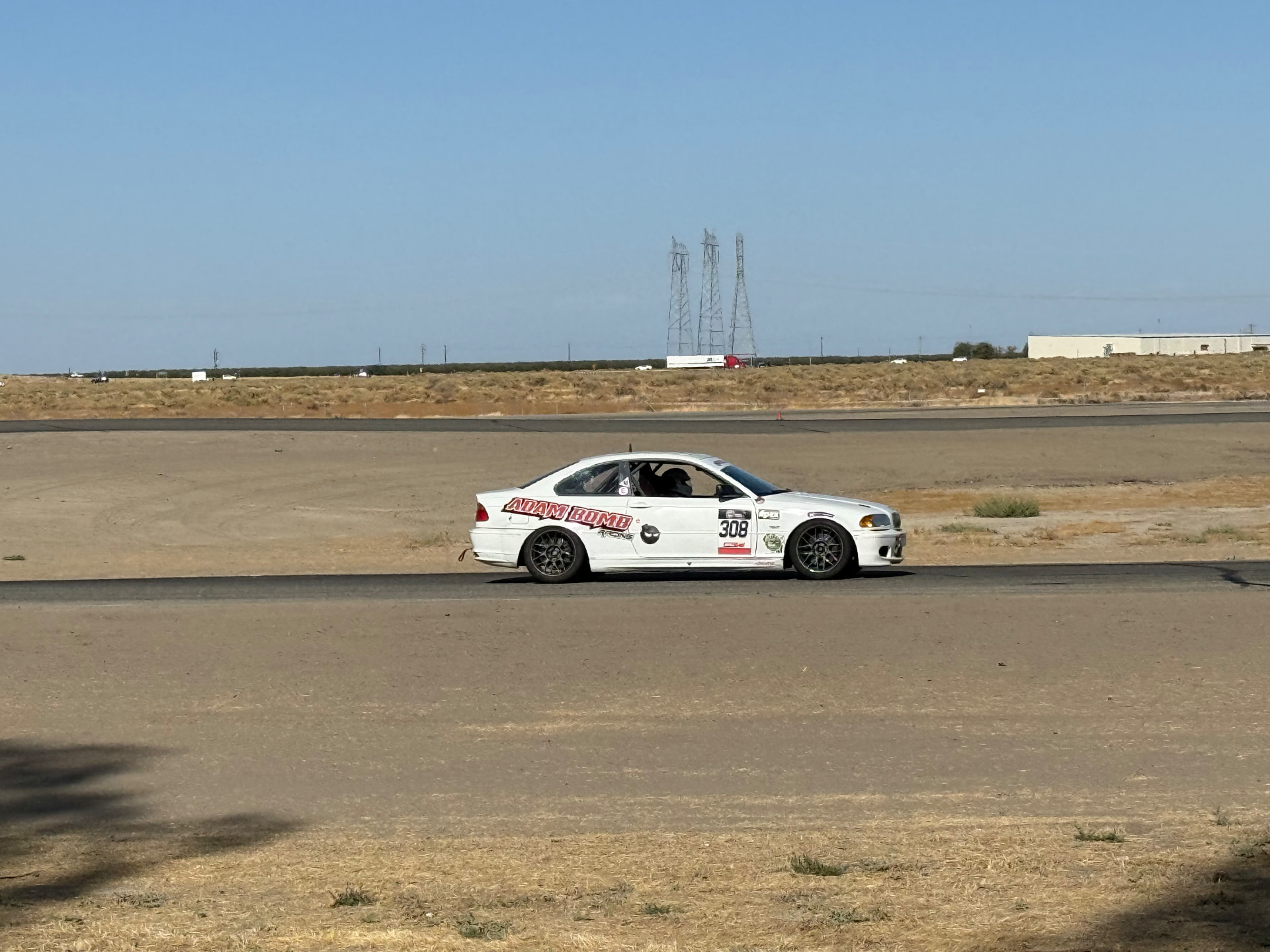
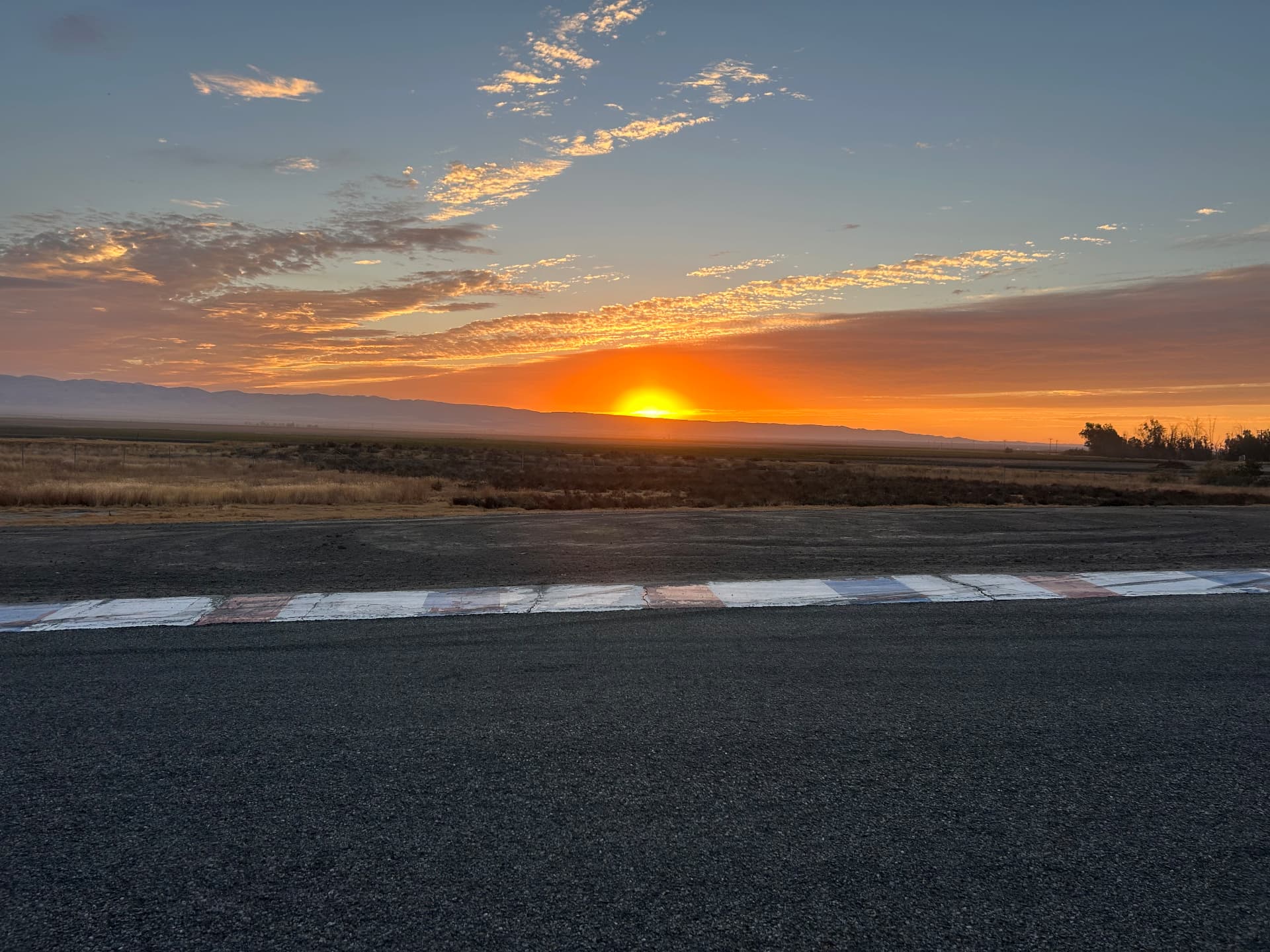
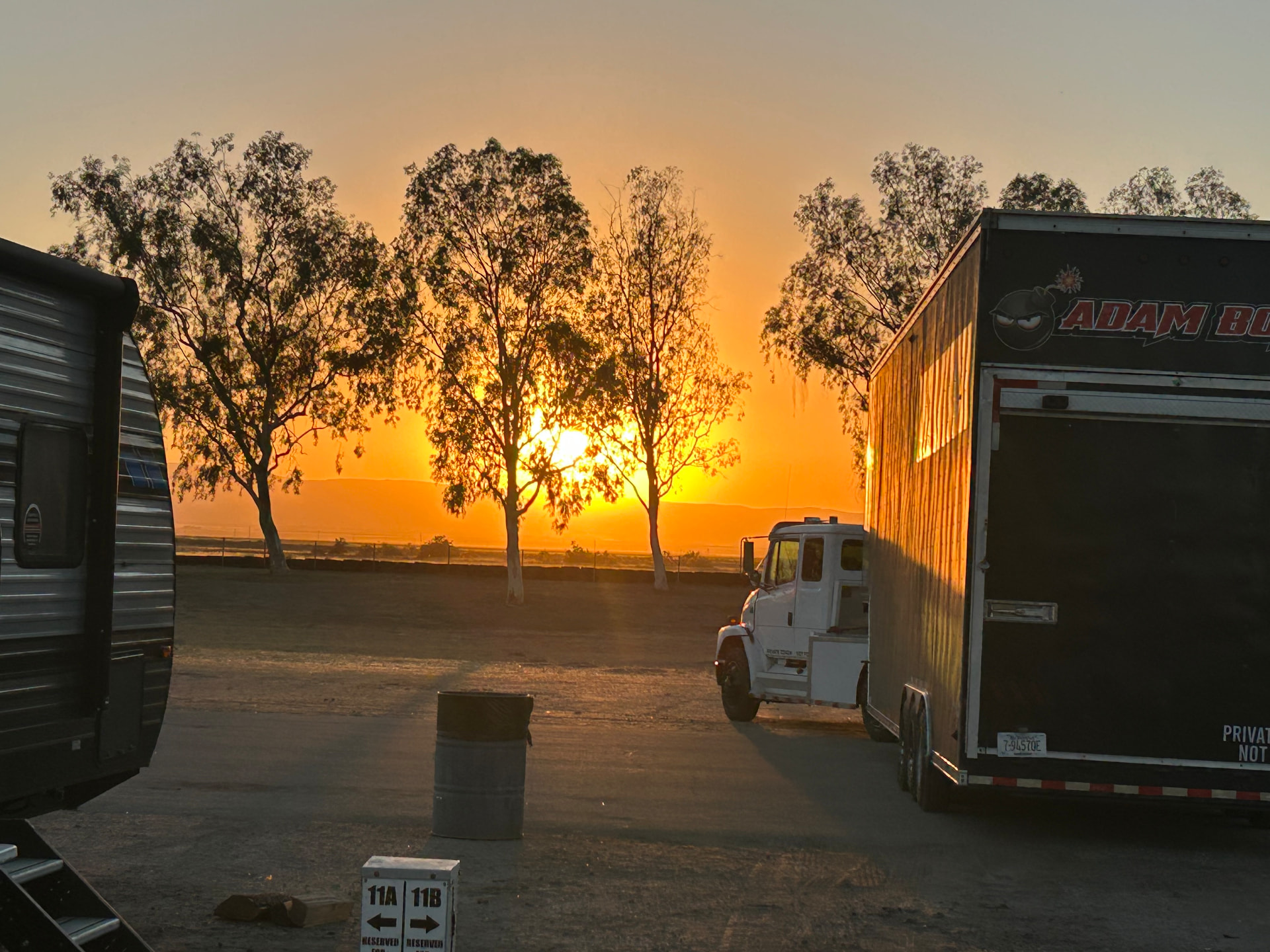
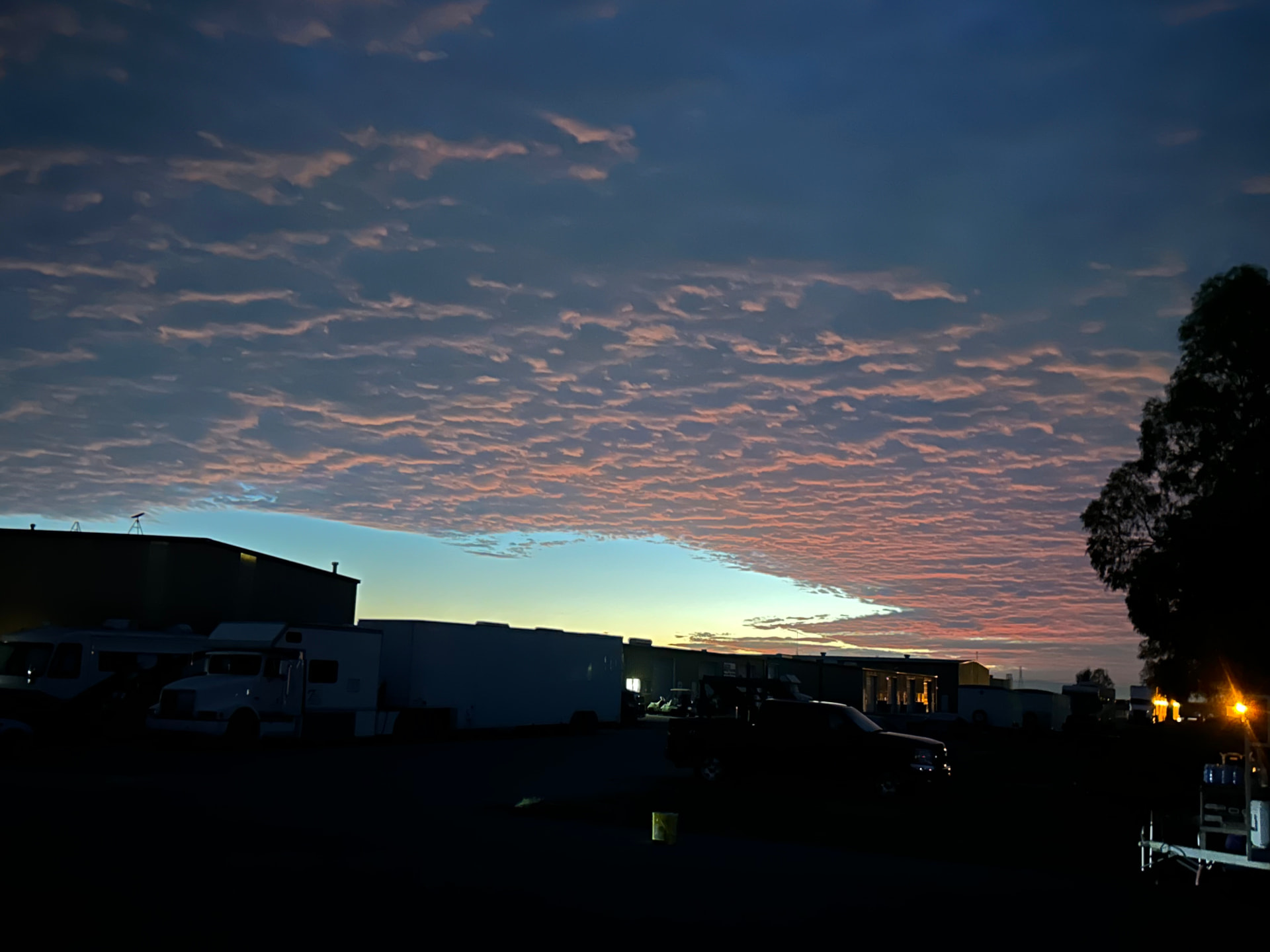
In-car video
Videos from the day
Lap data
- Friday
- 2:59
- Saturday
- 2:45 (−14s)
- Sunday
- 2:34 (−11s)
Next improvement
Diagnose and fix the E36, then keep working through HPDE 2 toward HPDE 3. Buttonwillow Raceway, Configuration 25, counterclockwise.
Expenses
Car prep & gear for Buttonwillow
| Roll-cage paddingParts & car prep | $106.65 |
| Seat tracksParts & car prep | $120.99 |
| Seat bracketsParts & car prep | $84.36 |
| Tow strapsParts & car prep | $56.00 |
| Rear folding tow hookParts & car prep | $9.19 |
| GoPro ball-mount adapterParts & car prep | $13.09 |
| GoPro replacement batteryParts & car prep | $7.75 |
| Fireproof socksPersonal safety equipment | $29.95 |
| Subtotal | $427.98 |
NASA HPDE · Buttonwillow Raceway
| Friday test day — October 9Track fees & instruction | $285.00 |
| NASA HPDE 1 registration — October 10–11Track fees & instruction | $585.95 |
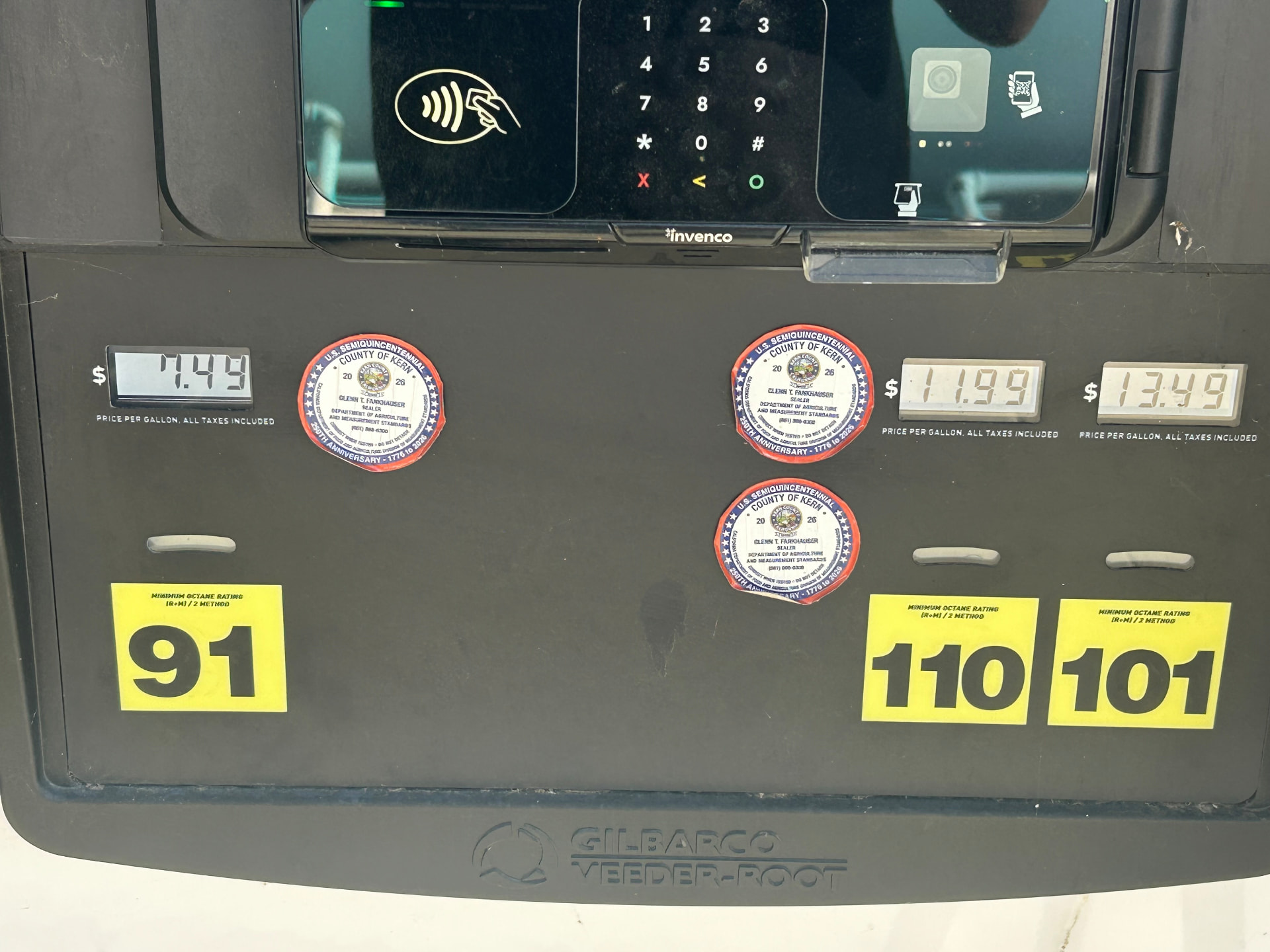
| Fuel — ChevronFuel, food & event costs | $272.08 |
| Buttonwillow Raceway purchasesFuel, food & event costs | $38.26 |
| Lunch — In-N-OutFuel, food & event costs | $40.00 |
| Subtotal | $1,221.29 |
Chevron receipts replace the earlier $175 fuel estimate. Three $1 card holds, groceries, and any trailer tire cost are not included.